ParkMyRig, Truck Parking Guide
ParkMyRig LLCTravel & Local
4.1103.00 Reviews
- Version
- 1.0.49
- Installs
- 10.00K
- Age Rating
- Everyone
Screenshots
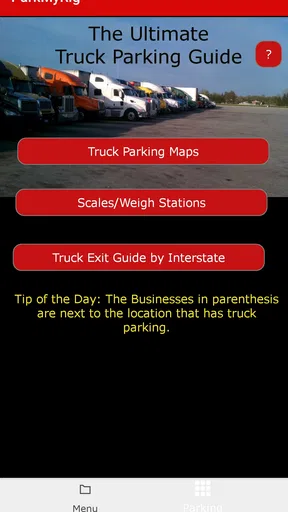
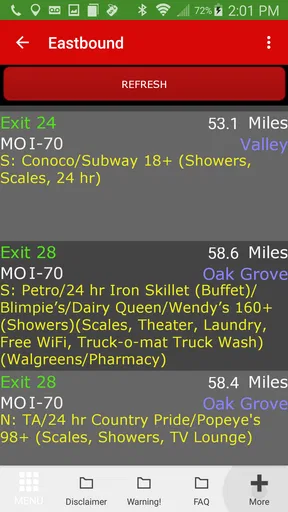
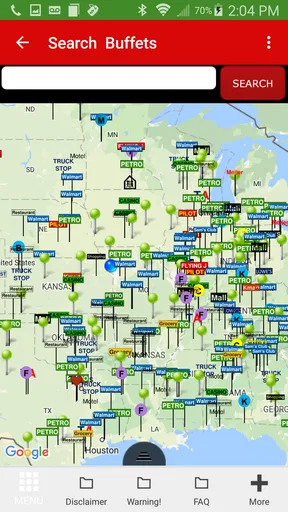
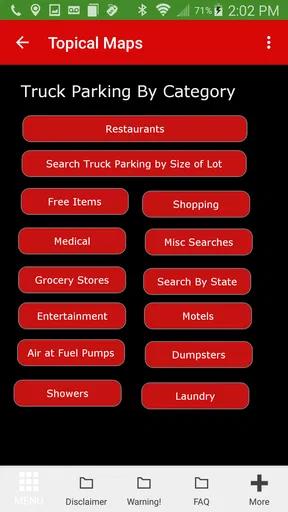
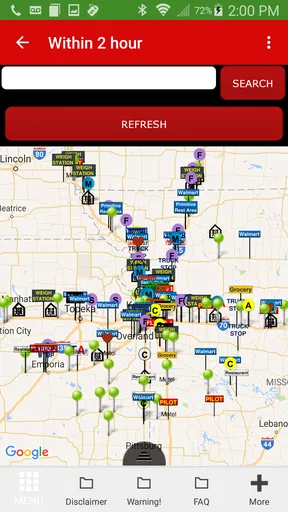
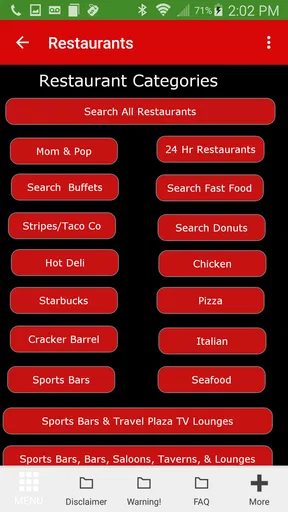
Our Review of ParkMyRig, Truck Parking Guide
 Analysis by Appyee
Finding a legal, usable place to stop a truck is a very different problem from finding a nearby fuel station or a general parking lot. Size, access, turning space, local restrictions, and the next leg of a route all matter at once. ParkMyRig, a free Travel & Local app from ParkMyRig LLC, is built around that specific problem. I approached it as a practical companion for truck drivers rather than as a broad navigation replacement, and that distinction is important from the first use.
The app’s focus is clear: it presents itself as a truck parking guide with a truck exit guide. That combination makes it more relevant to someone driving a large vehicle than an ordinary map application that happens to show parking symbols. My overall impression is that it can be useful when I need a quick reference for parking and exits, especially before committing to an unfamiliar stop. Its value depends heavily on how well it fits into a driver’s wider routine, because it is not the kind of tool I would trust to replace route planning, road signage, or common sense at the wheel.
How connectivity shapes the experience on the road
I find connectivity matters most in the handoff between planning and driving: I would check a likely stop while safely parked, then carry the decision into my regular navigation rather than depending on a fresh lookup at the last turn. That small pause also gives me time to keep a backup option in mind if access or signal becomes an issue. The next section looks at how that workflow translates into a practical choice on the road.
The app is most useful before the final approach
In my experience, a parking guide earns its place on a phone when it helps me make a decision early enough to avoid a bad approach. With a truck, discovering too late that a location is awkward can mean a difficult turn, an unnecessary detour, or a stressful search after a long shift. I would use ParkMyRig while stopped, or before entering the final stretch toward a destination, to review the available parking and exit information and decide whether the stop deserves a closer look.
That timing also explains why connectivity matters. A guide that relies on current access to its information is most comfortable when the phone has a dependable connection. On a strong signal, checking a location while parked at a fuel stop or rest area is straightforward. In a weak-signal area, I would not wait until the last possible moment to open the app. The sensible workflow is to consult it while the route is still flexible, then keep a backup plan in mind.
I would not treat an entry in a parking guide as permission to ignore physical signs. A location can be full, temporarily restricted, difficult to enter, or unsuitable for a particular trailer configuration. The app is best viewed as a planning aid that narrows the search, not as a guarantee that the space will be available when I arrive. That distinction is especially important at night, during busy travel periods, or whenever a delivery schedule leaves little room for experimentation.
Why the truck exit guide changes the decision
The exit-focused side is the more interesting part of the concept. Parking is only half the problem for a large vehicle. I also need to think about how I will leave, whether the route out is practical, and whether a seemingly convenient stop creates trouble when I am ready to depart. A guide that encourages me to consider the exit before entering can prevent the familiar mistake of choosing a place based only on the entrance.
This is one of the app’s strongest practical ideas: it supports a two-stage check. First, I can ask whether the location appears suitable for stopping. Then I can ask whether the departure path makes sense for the truck I am driving and the direction I need to take. That second question is easy to skip when I am tired or under time pressure, so having it built into the app’s purpose gives the tool a useful angle beyond a generic map.
Still, I would use the exit guide as an aid rather than a substitute for observing the road. Construction, temporary closures, weather, traffic controls, and changes in access can all affect the final move. If the app points me toward an exit but a sign or a physical obstruction says otherwise, the real-world information wins. The best use is to combine the guide with a quick visual check and, when appropriate, a second navigation source.
What a realistic stop-planning routine looks like
Imagine I am approaching the end of a driving period and want to avoid circling unfamiliar streets with a trailer. While safely stopped, I would open ParkMyRig, review the nearby options, and compare them with my intended route. I would pay attention not only to distance but also to whether the stop leaves me positioned sensibly for the next departure. If one option looks promising, I would make a note of its general location and keep another possibility ready in case the first is full or unsuitable.
That routine uses the app at its best: before the decision becomes urgent. I would then switch to my normal navigation method for the actual driving instructions, following road signs and checking the approach as I go. Once at the location, I would avoid making a last-second maneuver simply because the app suggested it. The app reduces uncertainty; it cannot remove the need for a driver’s judgment.
A useful habit is to check the exit direction before parking rather than after shutting down. If I know I need to head east in the morning, I can think about whether the stop’s departure naturally supports that direction or forces an awkward correction. This is a small planning step, but it is the kind of detail that separates a parking reference from a generic “nearby places” search.
Using it in mobile contexts without creating distraction
ParkMyRig is designed for a situation where the phone may be used in a moving workday, but that does not mean it should be operated while driving. I would handle searches, comparisons, and route decisions only when parked safely. The app becomes far more useful when it is part of a deliberate stop-planning routine instead of something I glance at while approaching a junction.
The phone context also affects readability and patience. A driver may be dealing with glare, vibration, gloves, fatigue, or a crowded cab. I would keep the interaction simple: check the next likely stop, confirm the exit idea, and close the app before moving. If I need to investigate several possibilities, I would do that during a break rather than trying to make a detailed decision at the roadside.
For team drivers or dispatch-supported trips, the app can also fit into a shared planning conversation. One person can review the parking question while the vehicle is stopped, then the driver can evaluate the approach using the road itself. That division reduces the temptation to handle the phone in motion. It also makes the exit information more valuable, because a second person can challenge an assumption before the truck enters a tight or unfamiliar area.
What happens when the connection is weak
Connectivity is the main practical qualification I would attach to this app. When information needs to be accessed at the moment of a decision, a poor signal can turn a quick lookup into a frustrating pause. Rural highways, industrial areas, mountain routes, and large yards are exactly the kinds of places where a driver may want help, yet they can also be the places where phone service is inconsistent.
I would therefore avoid building a plan around a single last-minute lookup. Before leaving a reliable connection, I would identify the next realistic parking options and remember the broad route to them. I would also keep ordinary navigation and visible road signs in the loop. This is not a criticism unique to ParkMyRig; it is a general limitation of using a connected phone guide in changing travel conditions. The important point is to recognize it before the signal disappears.
If the app does not respond quickly, I would not repeatedly tap through screens while trying to keep moving. The recovery method is simple: pull over safely, retry when stationary, and use the alternative plan if the information is still unavailable. A parking guide should reduce workload, not create another source of pressure. That is why I see advance checking as a core technique rather than an optional extra.
Data-conscious habits for regular use
Because this is a location-oriented travel app, I would use it thoughtfully when mobile data matters. I would avoid opening it repeatedly just to browse without a purpose. Instead, I would check it at natural planning points: before a long stretch, during a fuel stop, or when deciding between two possible overnight areas. That approach keeps the app focused and makes the information easier to remember.
I would also avoid assuming that a previous search remains current indefinitely. Parking conditions can change, and a location that worked on one trip may not fit the next vehicle, schedule, or direction. The practical balance is to consult the guide when the decision is relevant, while still keeping a fallback. Saving mental notes about the next stop and the departure direction is more useful than treating the phone as the only record of the plan.
For drivers who manage several stops in one day, short sessions are more sensible than leaving the app open continuously. Check the immediate need, make the decision, and return attention to the road. This is both a data-conscious habit and a safety-conscious one. The app’s usefulness comes from targeted information, not from constant monitoring.
Who will get the most from ParkMyRig
I think the best audience is truck drivers who regularly need to evaluate parking with the vehicle’s size and exit route in mind. It may be especially helpful for someone working unfamiliar corridors, a driver who wants a dedicated truck-focused reference, or a person who has had a bad experience choosing a stop based only on its apparent proximity.
It can also suit occasional users who do not want to install a large navigation suite just to investigate truck parking. Since the app is free to install, the barrier to trying it is low. The listing shows optional in-app purchases ranging from a couple of dollars to around twenty-five dollars per item, so I would review any purchase prompt carefully and decide whether the added value matches my actual driving routine rather than paying automatically.
The age classification is Everyone, but the practical audience is still specialized. A family traveler in a normal car may find a general map and ordinary parking search more convenient. Likewise, a courier working in dense urban streets may need live traffic, turn-by-turn guidance, and delivery tools more than a truck parking reference. ParkMyRig makes the most sense when truck access and departure are central concerns.
Where another tool may be the better choice
I would not use this app as my only navigation tool. General map applications are usually better suited to live traffic, broad route planning, street-level orientation, and continuously updated driving directions. A dedicated truck navigation system may be preferable when vehicle height, weight, length, or restricted roads must be integrated directly into routing. ParkMyRig has a narrower role, and that focus is useful only if I keep the roles separate.
There is also a difference between discovering a possible stop and confirming that it is right for today’s trip. A general map may show the surrounding roads more clearly, while ParkMyRig may frame the parking question in a way that is more relevant to truck use. I would compare both when the approach is complicated. The extra minute spent checking the surrounding road pattern can be worthwhile if the entrance or exit is not obvious.
Drivers who need guaranteed real-time availability may also find the concept less satisfying than a service built specifically around live occupancy information, if such information is essential to their work. A guide can help identify candidates, but it cannot make a full lot available. In that situation, the app is still useful as one layer of planning, but it should not be the sole basis for promising a precise arrival outcome.
Performance expectations and practical setup
The current version is 1.0.49, and the app requires at least OS 8.1. That makes compatibility worth checking before relying on it for work, particularly if the phone is older or managed by an employer. I would install and test it while stationary, confirm that it opens properly, and become familiar with the way it presents parking and exit information before taking it onto a demanding route.
The app has passed the early experimental stage in terms of public use: it has more than ten thousand installs, with an average rating of 4.1 from roughly one hundred forty ratings and just over one hundred written reviews. I read that as a sign of a useful but specialized tool rather than a universal solution. The rating is encouraging, while the modest scale suggests I should still judge it against my own routes and phone conditions.
ParkMyRig was released on October 19, 2016, so I would approach it as an established concept that still deserves a personal test before becoming part of a critical routine. The developer, ParkMyRig LLC, has chosen a clear niche, and the app’s identity is easier to understand than that of a general-purpose travel product. The question is not whether it does everything; it is whether its parking-and-exit focus solves a recurring problem for me.
Small workflow changes that improve the results
My first recommendation is to search earlier than feels necessary. When the next stop is still some distance away, I have more room to compare choices and recover if the preferred option does not work. Waiting until the fuel gauge, driving clock, or weather has already created pressure makes every limitation more noticeable, including a weak connection or an unclear approach.
My second recommendation is to evaluate the departure before choosing the parking spot. I would mentally trace the first few minutes after leaving: which direction will the truck face, where will the turn happen, and does the route align with the next destination? This is a non-obvious advantage of using a truck exit guide as part of the decision rather than treating it as a separate lookup.
My third recommendation is to keep two layers of information: the app for truck-specific parking guidance and a conventional navigation source for the surrounding road network. If the two appear to disagree, I would stop and investigate rather than forcing the route. This layered workflow takes a little more attention, but it is safer and more realistic than expecting one app to understand every operational detail.
Finally, I would test the app on an ordinary trip before using it during a tight delivery schedule. That trial reveals whether the interface is comfortable on my device, whether the connection at my usual stops is dependable, and whether the listed guidance matches the kind of decisions I actually make. A short test is more informative than assuming that a specialized label automatically means a perfect fit.
My connectivity verdict
After looking at the app through the realities of network-dependent travel, I see ParkMyRig as a focused planning companion rather than a complete driving system. Its most convincing contribution is the reminder to consider both parking and the way out. That is a practical distinction for truck drivers, and it gives the app a purpose that a normal parking search may not address as directly.
The trade-off is that I would not want to depend on it at the exact moment a signal fails, a lot is full, or conditions have changed. I would use it while safely stopped, preferably before the final approach, then confirm the physical situation with signs, road layout, and a backup navigation method. Used that way, the app can make parking decisions more deliberate without pretending to remove uncertainty from the road.
For someone who drives a truck and repeatedly struggles with finding a suitable stop or planning the departure, I would recommend giving it a careful trial. For a car driver, a live-navigation user, or anyone seeking guaranteed availability and fully integrated routing, another category of tool may be a better fit. My final view is positive but measured: ParkMyRig is most valuable when it helps me plan ahead, not when I ask it to rescue a last-second decision.
That makes the free app worth considering for the right audience. Its narrow focus is not a weakness when the problem is specifically truck parking and truck exits. It becomes a limitation only when I expect live traffic, complete route control, or certainty beyond what a connected guide can reasonably provide. With safe timing, a fallback plan, and a second look at the actual road, it can earn a useful place in a professional driver’s mobile toolkit.
Verdict
Strengths of ParkMyRig, Truck Parking Guide
- Helps locate truck parking areas before reaching your destination.
- Useful for comparing parking options along long-haul routes.
- Designed around the needs of drivers with larger vehicles.
- Can reduce time spent searching for suitable parking spaces.
- Practical reference tool for planning rest stops during trips.
Limitations of ParkMyRig, Truck Parking Guide
- Parking availability may change before you arrive.
- Coverage can vary significantly by region or country.
- Some listings may lack recent details or user updates.
- It may not guarantee reservations or an available parking spot.
- Requires careful checking of vehicle size and site restrictions.
Similar Picks in This Category
View All
Google Maps
Google LLC3.4

Google Maps Go
Google LLC4.1

Booking.com: Hotels & Travel
Booking.com Hotels & Vacation Rentals4.8

Google Earth
Google LLC3.8

Skyscanner Flights Hotels Cars
Skyscanner Ltd4.8

trivago: Compare hotel prices
trivago N.V.4.4
Frequently Asked Questions
What is ParkMyRig, Truck Parking Guide used for?
ParkMyRig, Truck Parking Guide is designed to help truck drivers find and evaluate parking options during a journey. It can be useful for locating suitable stops, checking available facilities, and planning rest breaks more efficiently. The app is especially relevant for drivers handling large vehicles, although the exact coverage and usefulness may depend on the region and the quality of information available for each location.
Does ParkMyRig provide real-time truck parking availability?
The app may provide parking information and location details, but users should not automatically assume that every listing reflects live availability. Truck parking spaces can fill quickly, particularly at night, on weekends, or along busy freight routes. Before relying on a suggested location, it is wise to review the latest information in the app and confirm conditions through official sources or by contacting the parking facility when possible.
Can I use ParkMyRig without an internet connection?
ParkMyRig may require an internet connection for features such as loading updated parking listings, viewing current information, or accessing map-based content. Drivers should check whether the app supports offline maps or saved locations before starting a trip. Downloading important route details in advance is recommended, since rural areas, tunnels, border crossings, and some highways may have weak or unavailable mobile coverage.
Is ParkMyRig suitable for all types of trucks and trailers?
The guide is primarily intended for commercial truck drivers, but not every parking location will be appropriate for every vehicle. Space length, turning room, weight restrictions, trailer access, security arrangements, and overnight parking rules can vary considerably. Drivers should carefully review the details of each location and confirm that it can accommodate their specific truck and trailer combination before entering or committing to the route.
Are the parking listings and facility details reliable?
ParkMyRig can be a helpful planning tool, but parking data should be treated as guidance rather than a guarantee. Facilities may change their opening hours, prices, security policies, services, or access rules without immediate updates in the app. Information can also vary by location and user contributions. For important stops, verify the details with the operator, road authorities, or another current source before depending on the listing.
